Cities are becoming denser, hotter, and more dependent on efficient stormwater management. As buildings continue to expand upward, rooftops are no longer just unused spaces. They can become valuable green areas that support climate-conscious urban design. A modular green roof tray is one practical way to make this possible. It helps transform flat rooftops into planted spaces while supporting drainage, water retention, and easier installation.
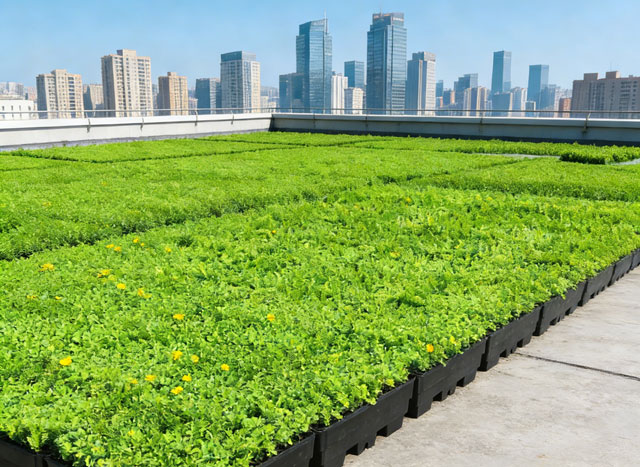
The HT-5020 Green Roof Tray System is designed as a semi-intensive rooftop greening solution. It combines modular installation, water storage, drainage, and plant support in one system.
Why Rooftop Greening Is Becoming More Important
Urban areas often face two common environmental challenges: fast stormwater runoff and the heat island effect. When rain falls on traditional roofs, water usually flows quickly into drainage systems. During heavy rainfall, this can increase pressure on city infrastructure. At the same time, concrete, asphalt, and dark roof surfaces absorb heat. This contributes to higher urban temperatures, especially in summer.
A green roof can help reduce these problems. Plants, soil, and water retention layers can slow rainwater runoff and help cool the roof surface. This is why rooftop greening is becoming an important part of modern sustainable building design.
What Is a Modular Green Roof Tray?
A modular green roof tray is a ready-to-use unit for rooftop planting. Instead of building every layer separately on the roof, the tray provides a more organized structure for planting media, drainage, and water retention. This makes installation easier for contractors. It also helps designers create rooftop gardens with better control over layout and function. A modular system can be used for residential buildings, commercial roofs, hotels, schools, public buildings, and urban renovation projects.
For many projects, a lightweight rooftop greening solution is important. Roof load, installation speed, maintenance, and drainage must all be considered before choosing a green roof system.
HT-5020 Green Roof Tray System: Key Design Features
The HT-5020 system is developed for semi-intensive green roof applications. It is suitable for projects that need more planting depth than simple extensive green roofs, while still keeping the system modular and manageable. One of its key features is the tray structure. The module provides space for growing media and plant roots while helping manage water movement inside the system.
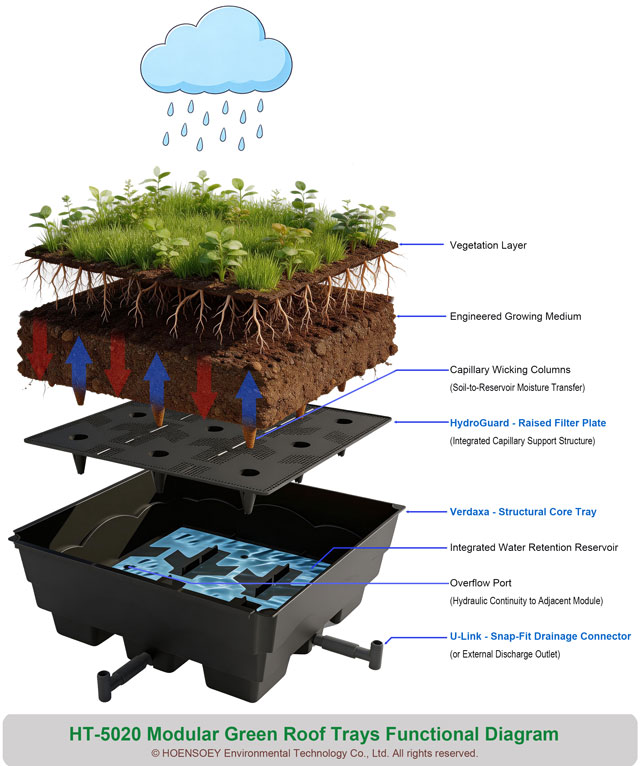
The tray also supports water storage and controlled drainage. This helps create a balance between keeping moisture for plants and releasing excess rainwater when necessary. This makes HT-5020 more than a simple planting container. It works as a stormwater retention tray and rooftop greening unit at the same time.
Stormwater Retention Tray for Better Rainwater Control
Stormwater management is one of the most important functions of a green roof. A well-designed stormwater retention tray can temporarily hold part of the rainwater after rainfall. This reduces the speed and volume of runoff from the roof. For cities with frequent heavy rain, this can help reduce drainage pressure. For buildings, it can also support a more stable rooftop landscape system.
The HT-5020 Green Roof Tray System is designed with water retention and drainage functions. It allows the system to keep useful moisture while guiding excess water away from the planting area. This balance is important. Plants need water, but too much water can cause root stress and long-term maintenance problems.
Supporting Heat Island Effect Reduction
The heat island effect reduction benefit of green roofs is another reason they are gaining attention. Traditional roof surfaces can become very hot under direct sunlight. A planted roof surface can help lower surface temperature through shading, soil moisture, and plant evapotranspiration.
A modular green roof tray system makes this approach easier to apply. By adding plants to unused roof areas, buildings can contribute to cooler urban environments. For residential and commercial projects, this can improve the overall environmental value of the building. It also supports the image of a more responsible and future-ready property.
Interlocking Green Roof System for Easier Installation
A green roof must remain stable during installation and use. This is why the connection between trays matters. HT-5020 is designed as an interlocking green roof system. The modules can be arranged together to form a stable rooftop greening area. This helps reduce movement between trays. It also makes the system easier to organize during installation.
For contractors, modular installation can save time compared with traditional multi-layer green roof construction. For future maintenance, individual areas can also be checked or adjusted more conveniently.
Water Retention, Drainage, and Plant Health
A good rooftop greening system must do more than hold soil. It needs to support plant growth, manage rainwater, and protect the roof structure. Water must be retained when plants need it, but excess water must also be drained away.
The HT-5020 system is designed with this balance in mind. Its internal structure supports water storage, drainage paths, and root-zone moisture management. This helps create a better growing environment for rooftop plants. It also helps reduce the risk of waterlogging, especially after heavy rainfall.
A Sustainable Building Solution for Modern Projects
The demand for sustainable building products is increasing worldwide. Developers, architects, landscape designers, and building owners are looking for systems that offer both environmental value and practical construction benefits.
A modular green roof tray can support this goal. It helps create usable green space on rooftops. It supports stormwater management. It contributes to heat island effect reduction. It also makes rooftop greening easier to install and maintain. This makes modular green roof trays a practical sustainable building solution for modern urban projects.
Where Modular Green Roof Trays Can Be Used
Modular green roof tray systems can be used in many types of projects, including:
- Residential rooftop gardens
- Commercial building roofs
- Hotel and resort green terraces
- School and public building rooftops
- Urban renewal projects
- Green building demonstration projects
- Lightweight rooftop greening applications
- Semi-intensive green roof landscapes
For each project, the system design should consider roof load, plant selection, local climate, drainage requirements, and maintenance needs. This is why technical support from the supplier is also important.
Choosing a Reliable Green Roof Tray Supplier
When choosing a green roof tray system, buyers should not only look at the product price. They should also consider system design, drainage logic, material quality, installation method, and long-term performance. A reliable supplier should be able to explain how the system works. They should also provide product details, project suggestions, and suitable technical guidance.
HOENSOEY provides green roof, drainage, and stormwater management products for global landscaping and construction projects. Its HT-5020 Green Roof Tray System is designed to support modular rooftop greening, stormwater retention, and sustainable urban development.
Conclusion
Green roofs are no longer just a design trend. They are becoming a practical part of sustainable urban living. A modular green roof tray can help buildings manage rainwater, reduce roof surface heat, and create more green space in dense cities. Systems such as the HT-5020 Green Roof Tray System provide a practical way to combine planting, drainage, water retention, and modular installation.
For modern cities, this type of interlocking green roof system can support better rooftop use and more sustainable building design. Whether you need small-scale pilot project samples or large-scale residential and commercial building matching solutions, HOENSOEY can provide professional technical guidance and customized quotation services for global urban greening projects.